Blog
Knowledge & Insights
We share knowledge about mobile apps, technologies, and industry best practices.
Featured
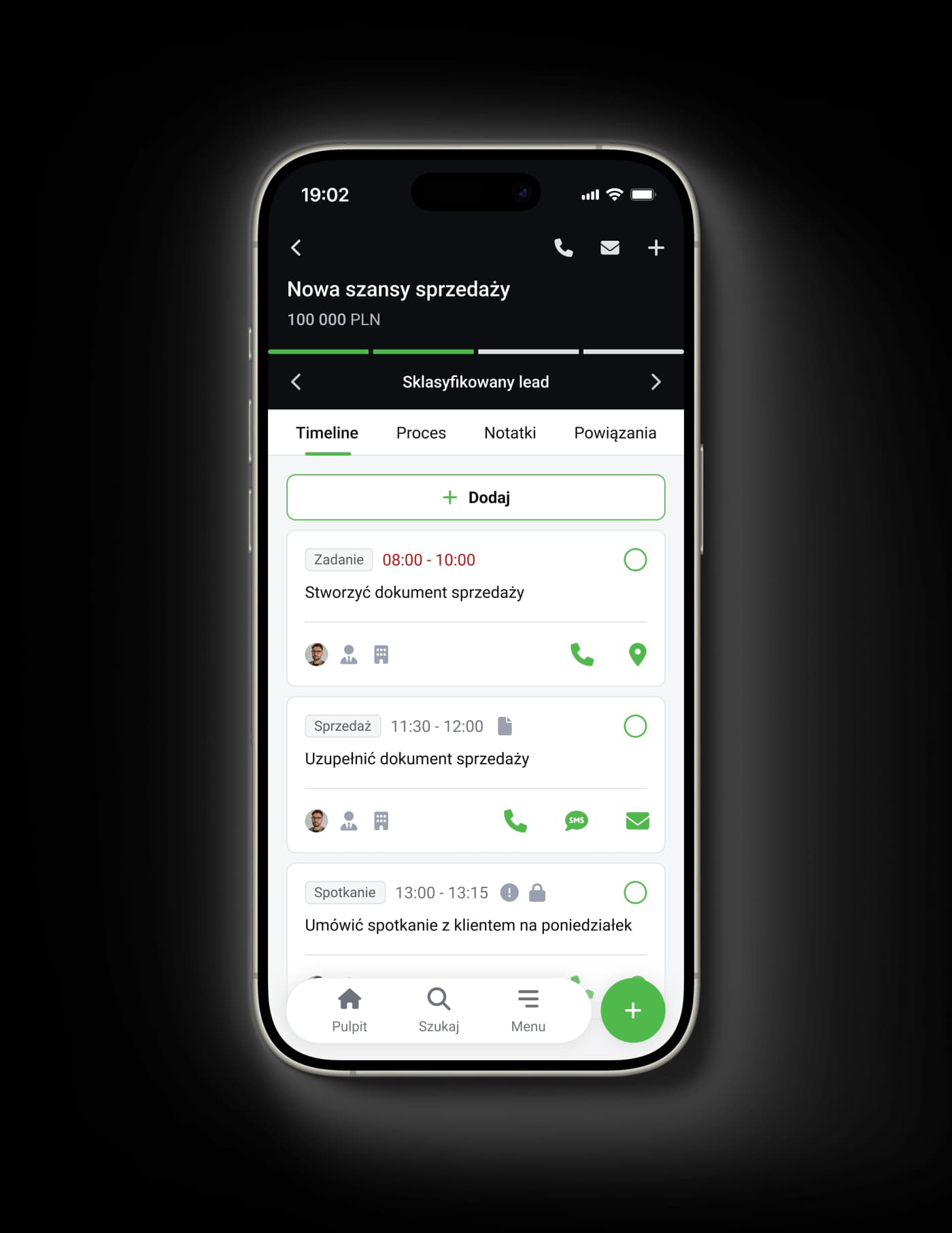
ERP integration for a field sales mobile app
A practical ERP–CRM–mobile architecture guide covering data ownership, offline mode, synchronization, security, MVP scope and build vs buy.
AI copilot for B2B quotes — implementation
How to build a B2B quote copilot grounded in CRM, ERP and PIM data: architecture, pricing controls, seller review, pilot metrics and build vs buy.
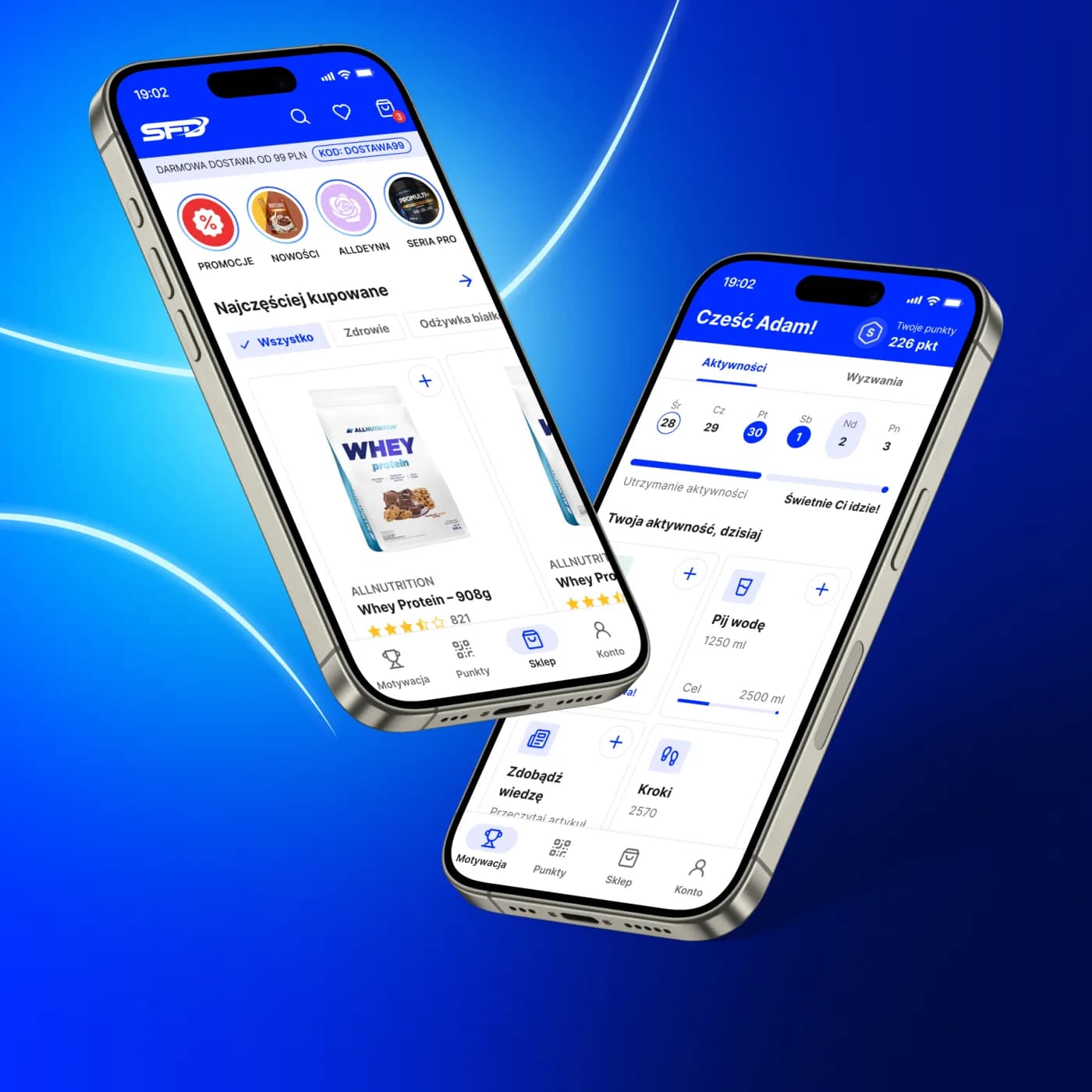
Mobile Trends Awards 2025 nomination: SFD app in Commerce category
The SFD Mobile Trends Awards 2025 nomination is more than news. We break down the evidence: shop, loyalty, gamification, 4.9 on the App Store and the operating model behind it.
React Native vs native apps in 2026: a business decision, not a technology religion
The right choice does not depend on which framework has louder fans. It depends on product risk: time-to-market, maintenance cost, hardware access, performance, release operations and app-store quality. A practical decision model for CEOs, CTOs and Heads of Product.
E-commerce mobile app margin: when an app lifts LTV and when it burns budget
A mobile app improves margin only when it captures repeat purchases, shortens checkout and creates measurable LTV growth without aggressive discounting. This guide covers the decision model, ROI metrics, push pitfalls, React Native and MedusaJS architecture, and lessons from the SFD app.
All Articles
Expo vs bare React Native for business apps
A practical comparison of Expo and bare React Native for commerce, loyalty and operations apps: release flow, native modules, maintenance cost, risk and the executive decision.
React Native vs PWA for a commerce app
A comparison of React Native apps and PWAs for ecommerce: retention, push, app stores, SEO, maintenance cost, loyalty and when an app is worth building.
MedusaJS vs Shopify for B2B commerce
A comparison of MedusaJS and Shopify for B2B commerce: contract catalogs, customer pricing, ERP, PIM, WMS, checkout, maintenance and total cost of ownership.
Custom commerce vs Shopify Plus: how to calculate TCO
A decision model for CFOs and ecommerce owners: platform fees, take rates, apps, integrations, margin, code ownership, maintenance and change risk.
Next.js vs Remix for a commerce storefront
A comparison of Next.js and Remix for headless commerce: SEO, caching, cart, product data, team complexity, hosting, performance and delivery risk.
NestJS vs Express for a product backend
A comparison of NestJS and Express for companies building APIs, integrations and SaaS products: architecture, speed, testing, maintenance, team structure and technical debt cost.
Prisma vs Drizzle for PostgreSQL SaaS
A comparison of Prisma and Drizzle for SaaS products: delivery speed, SQL control, migrations, performance, types, tenancy and database maintenance.
RAG vs fine-tuning for company knowledge
A comparison of RAG and fine-tuning for company assistants: freshness, sources, security, cost, evaluation and answer control.
AI agent vs workflow automation in operations
When to use an AI agent and when to use classic workflow automation: exceptions, data, human decisions, integrations, audit, maintenance cost and pilot metrics.
In-house vs agency for mobile app development
A comparison of building a mobile app in-house or with an agency: hiring cost, start speed, accountability, app store quality, maintenance and knowledge transfer.
Dedicated team vs fixed-price software project
How to choose a collaboration model for a digital product: fixed price after DDT, dedicated team, scope ownership, uncertainty, change and budget control.
MedusaJS vs custom Node.js commerce engine
When to build on MedusaJS and when to write a custom commerce engine: commerce domain, core module cost, integrations, maintenance and ownership of business logic.
What is a mockup, and why should you create one before coding?
A mockup shows product layout, hierarchy and visual direction before expensive implementation starts. This guide explains the difference between sketches, wireframes, mockups and prototypes, and when each one is enough.
Third-party software: benefits, risks and a selection checklist
A ready-made component can shorten delivery, but it creates dependencies on vendor pricing, APIs, security and roadmap. This guide shows how to make a deliberate build-versus-buy decision.
Solar monitoring system development: architecture, features and delivery process
A solar monitoring system connects inverter and meter data with alerts, performance analysis and service workflows. This guide covers MVP scope, data architecture and integration risks.
Blockchain at the core of an IT product: when it helps and when it does not
Blockchain solves a specific shared-trust, ownership or immutable-record problem. If a product does not need those properties, a conventional database will be simpler, cheaper and faster.
Proxy Product Owner: how to avoid decision chaos in a software project
A Proxy Product Owner can translate investor goals into daily team decisions, but cannot take over business accountability. This guide defines the role, boundaries and operating cadence.
CMS, CRM and ERP: what is the difference and when should they integrate?
A CMS manages content, a CRM manages customer relationships and an ERP manages operations and finance. Problems begin when every system holds its own version of the same data.
Choosing a software development company for a Dubai-based business
Vendor location matters less than time-zone overlap, outcome ownership, data security and delivery evidence. Here is a practical checklist for companies in Dubai and the Gulf region.
Raspberry Pi and AI: architecture for voice assistants and edge integrations
Raspberry Pi can handle audio input, devices and local logic while heavier models run in the cloud or on a separate accelerator. The key decisions are latency, privacy and offline resilience.
Product design vs product development: responsibilities and delivery order
Product design defines the problem, experience and behaviour of a solution. Product development covers building, releasing and operating the full product. Both disciplines need one shared loop.
Outsourcing software development: benefits, risks and a control model
Outsourcing provides faster access to skills and flexible capacity, but without a product owner, code access and shared acceptance criteria it can increase risk rather than reduce it.
MedusaJS + Next.js for B2B storefronts: architecture, cost and risks
A practical guide to B2B storefronts: MedusaJS v2 as commerce core, Next.js as the buying portal, customer groups, price lists, sales channels, ERP/PIM and implementation cost.
NestJS microservices: when should ecommerce split order processing from a monolith?
A decision guide for CTOs and ecommerce leaders: when to keep the monolith, when to extract order management, and how to use NestJS, RabbitMQ/Redis, Strangler Fig and DDT without checkout risk.
Headless vs monolith commerce in 2026: cost, risks and decision framework
A practical decision matrix for CTOs, ecommerce and CFOs: when to keep monolith/SaaS, when to use headless-light, and when to build custom headless with MedusaJS, Next.js and ERP/PIM integrations.
PostgreSQL RLS for multi-tenant SaaS: data isolation, cost and risks
A practical guide for founders and CTOs: pooled vs silo tenancy, PostgreSQL Row-Level Security, tenant context, FORCE RLS, isolation tests, NestJS, Prisma and the cost of building without cross-tenant leaks.
Event-driven commerce: Redis, RabbitMQ, SQS or Kafka?
A practical guide for CTOs and ecommerce teams: when to use Redis Streams, RabbitMQ, AWS SQS/FIFO or Kafka, and how to design checkout, retries, DLQs, idempotency, ERP sync and implementation cost.
React Native app store launch checklist for App Store and Google Play
A practical React Native and Expo release checklist: developer accounts, EAS Build/Submit, TestFlight, Google Play closed testing, privacy, payments, reviewer access and rejection recovery.
CPQ for manufacturing and B2B ecommerce: pitfalls, architecture and cost
A practical CPQ guide for manufacturers: where configuration rules should live, how to connect BOM, ERP, pricing, 3D and B2B storefronts, and when MedusaJS + NestJS makes sense.
Real-time inventory in quick commerce: reservations, Redis, WMS and overselling
A practical q-commerce architecture: short cart holds, Redis, MedusaJS Inventory, WMS/ERP as source of truth, WebSockets, idempotent checkout and overselling metrics.
MACH architecture in ecommerce: a stakeholder guide
A practical guide for leadership, CTOs and ecommerce teams: what MACH means, when to migrate from a monolith, how to calculate TCO, what can go wrong and how to plan a phased transition.
T-shaped developers in mobile commerce: when they speed delivery up, and when they hide risk
A practical guide for CTOs, product owners and ecommerce leaders: how to evaluate T-shaped developers, how to staff React Native, backend, ERP/PIM/WMS and checkout work, and when to add narrow specialists.
SFD commerce app: lessons from high traffic and MTA recognition
SFD case study: when a commerce app is not a mobile-web copy, but a retention channel. Lessons on cart, loyalty, campaign peaks, React Native and backend.
Ecommerce observability: how to prepare checkout for Black Friday 2026
A practical guide for CTOs and ecommerce leaders: which SLIs/SLOs, traces, logs, business alerts, runbooks and tests you need before peak traffic so cart, payments and integrations do not fail after campaign launch.
B2B marketplace split checkout: orders, payments, payouts and invoices
A practical guide for founders, CTOs and B2B marketplace operators: how to split one buying experience into vendor orders, payments, platform fees, invoices, refunds and ERP integrations.
B2B ecommerce trade credit: ERP, limits, invoices and risk
A practical guide for CTOs, CFOs and ecommerce leads: how to model credit exposure, limit reservations, net terms, ERP reconciliation, MedusaJS, NestJS and B2B checkout without blocking sales.
Staff augmentation vs product team: when to buy capacity and when to buy outcomes
A practical decision model for founders and CTOs: when staff augmentation really helps, and when a product team with discovery, architecture, QA, release and outcome ownership is safer.
Ecommerce security review before Black Friday: a CTO checklist
A practical runbook for CTOs and ecommerce leads: APIs, bots, DDoS, checkout, payments, PostgreSQL, observability, incident response and fixed-price remediation after DDT.
Composable commerce OMS: fulfilment, split shipments and ERP/WMS
A practical guide for CTOs, ecommerce and operations teams: when OMS should be a separate capability, and how order routing, inventory reservation, split fulfilment, returns and WMS/3PL handoff work.
Mobile app and backend from one partner: when does it make sense?
A practical guide for CEOs, CTOs and heads of digital: when one partner should own the app, backend, API, integrations and release, and when splitting teams still makes sense.
NestJS, Prisma and PostgreSQL at scale: diagnosis, architecture and cost
A practical guide for CTOs and founders: when Prisma speeds delivery, when it starts choking PostgreSQL and how to plan a NestJS backend refactor without blindly burning budget.
MACH vs composable commerce in ecommerce: is it the same thing?
MACH is an architecture standard. Composable commerce is how you assemble capabilities and vendors. See the difference, integration cost, lock-in risk and a practical MedusaJS v2 model.
MACH architecture in B2B ecommerce: ERP, PIM and payments
B2B does not win with button colour. It wins when ERP, PIM, WMS, prices, limits and orders speak one language. A reference MACH model with MedusaJS v2.
When should you not adopt MACH architecture in ecommerce?
MACH is not a maturity badge. It is an expensive architecture decision. See when to stay on SaaS, when to choose lighter headless and when to revisit MACH in 12-18 months.
Medusa vs Shopify Plus: headless e-commerce TCO in 2026
A practical 3-year TCO comparison: licenses, apps, GMV, run cost, ERP and B2B workflows. When Shopify Plus speeds up launch, and when MedusaJS v2 protects margin and stack ownership.
Medusa vs commercetools vs Saleor - headless B2B in 2026
Open-source vs enterprise SaaS for B2B: license cost, ERP integrations and MVP speed with custom workflows.
How much does a MedusaJS implementation cost in 2026?
EUR/USD ranges: audit, MVP, B2B with ERP and run cost. How GMI Software quotes after DDT and what moves the final fixed price.
React Native vs Flutter in 2026 - business decision guide
Cost, team, time-to-market, performance and maintenance - when GMI picks React Native with Expo and when Flutter still makes business sense.
React Native app development cost in 2026
EUR/USD ranges by app type, integrations and MVP timeline. Poland nearshore vs US rates and what moves the final fixed-price quote.
How to choose a React Native development company
Criteria, red flags, RFP questions and a checklist for CTOs and founders picking a React Native with Expo partner in 2026.
Magento to MedusaJS migration guide 2026
Migration phases, B2B catalog mapping, ERP integrations, risks and time/cost ranges. When Medusa v2 replaces Magento 2 financially.
React Native agency in Europe - how to choose a partner 2026
Guide for UK, DACH and US CTOs: when a European RN agency fits, Poland nearshore, partner checklist, RFP questions and GMI delivery model.
Nearshore software development from Poland - guide 2026
Nearshore model for US/UK/EU: CET overlap, cost vs USA, risks, when Poland vs UK/US on-site, fixed price and GMI services.
MedusaJS B2B e-commerce guide 2026
A practical Medusa v2 B2B guide: contract pricing, credit limits, approval workflows, ERP integration and Next.js storefront - with budget ranges and pre-kickoff questions.
MedusaJS development agency in Europe - how to choose
A practical guide for CTOs and e-commerce leaders: when a Medusa v2 agency makes sense, how to tell a platform partner from a storefront vendor and what to ask before an RFP.
Medusa vs Saleor - headless comparison 2026
Medusa v2 vs Saleor without marketing fog: architecture, TCO, B2B, GraphQL, ERP integrations, mobile and a DDT checklist for CTOs choosing headless commerce.
Commerce mobile app development guide 2026
How to design a commerce app that sells: React Native, headless backend, checkout, loyalty, push, analytics, App Store compliance, MVP cost and the SFD case.
React Native app maintenance cost in 2026
Real retainer ranges, iOS/Android/Expo upgrade calendar, SLA, crash monitoring and the decision: agency, ad hoc or your own mobile team.
Expo for business apps - when and why 2026
When Expo is the right choice for a production React Native app: EAS Build, Update, Submit, CNG, dev builds, store risks and when bare RN is the better call.
Hire dedicated developers from Poland - nearshore model 2026
How to buy dedicated developers from Poland without falling into body leasing: FTE rates, engagement models, onboarding, ownership, risks and when a product team or fixed price is better.
Poland vs US agency - software development cost 2026
A CFO-grade comparison of software development cost in Poland and the USA: rates, 3-year TCO, hidden costs, overlap, quality risks and when a higher US agency price makes sense.

MVP strategy: How to scope, build and price an app in 2026 (without burning budget)
An MVP is not a cheaper full product. It is a decision about what you need to learn: prototype, PoC or production MVP. Scope, metrics, cost and stack framework from GMI.
Next.js commerce in production: caching, PPR, MedusaJS and Core Web Vitals
A practical guide for CTOs and ecommerce leads: when to use static shells, streaming, Cache Components, revalidateTag, MedusaJS, RUM and BFF patterns in a Next.js storefront.
B2C loyalty app: how to grow repeat purchase without burning margin
A loyalty app does not work because it has points and push. It works when it lowers the cost of the next order, builds a habit, personalizes the return moment and measures incremental profit after rewards, returns and operating cost.
Mobile UX/UI trends in 2026: design that sells
Mobile UX/UI trends in 2026: Liquid Glass, Material 3, AI, accessibility, shorter checkout, design systems and the metrics that separate product work from decoration.
Let's talk
about the project.
Have an app idea or need technological support? Write to us — we'll prepare a preliminary analysis and estimate within 48h. Projects that go through our DDT process (Discovery, Design & Technology) come with a price guarantee and a fixed-price agreement — a key differentiator for us.

80-890 Gdansk, PolandNearshore product delivery across EU, UK and US time zones.