SFD commerce app: lessons from high traffic and MTA recognition
SFD case study: when a commerce app is not a mobile-web copy, but a retention channel. Lessons on cart, loyalty, campaign peaks, React Native and backend.
SFD shows when a commerce app makes sense: not as a copy of mobile web, but as an owned customer-return channel. Shop, points, motivation, challenges and fast offer access meet in one app, while technology has to keep cart, account and promo logic predictable during campaigns.
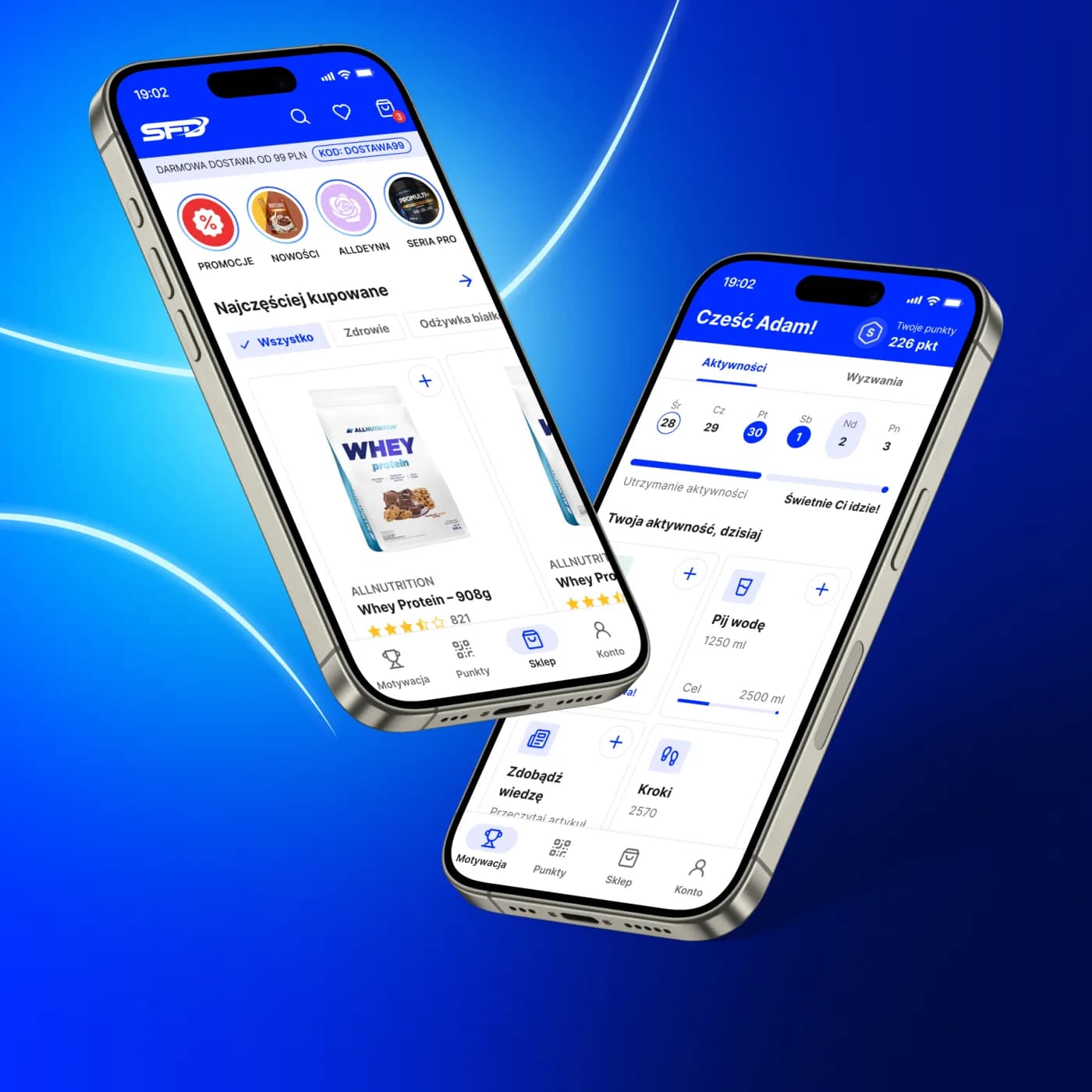
What does this case actually prove?
This is not a story about pretty UI. It is a story about a product that must work when marketing brings traffic, the customer wants to buy fast and the brand needs retention beyond paid media.
Product on screen: commerce plus loyalty
The core lesson: an e-commerce app cannot be only a mobile catalogue. It needs a reason to return: fast shopping, point status, challenges, activity history and simple account access.
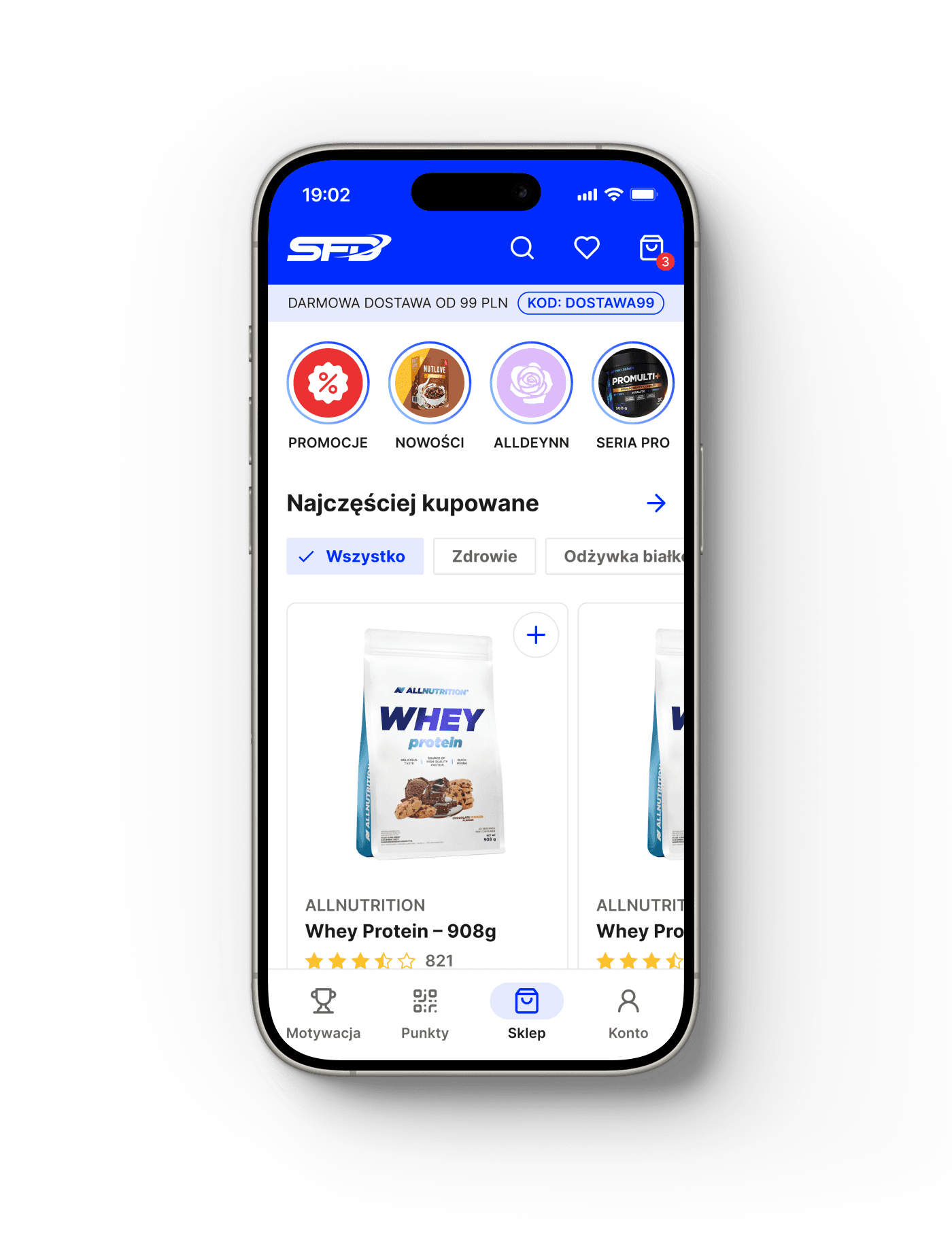
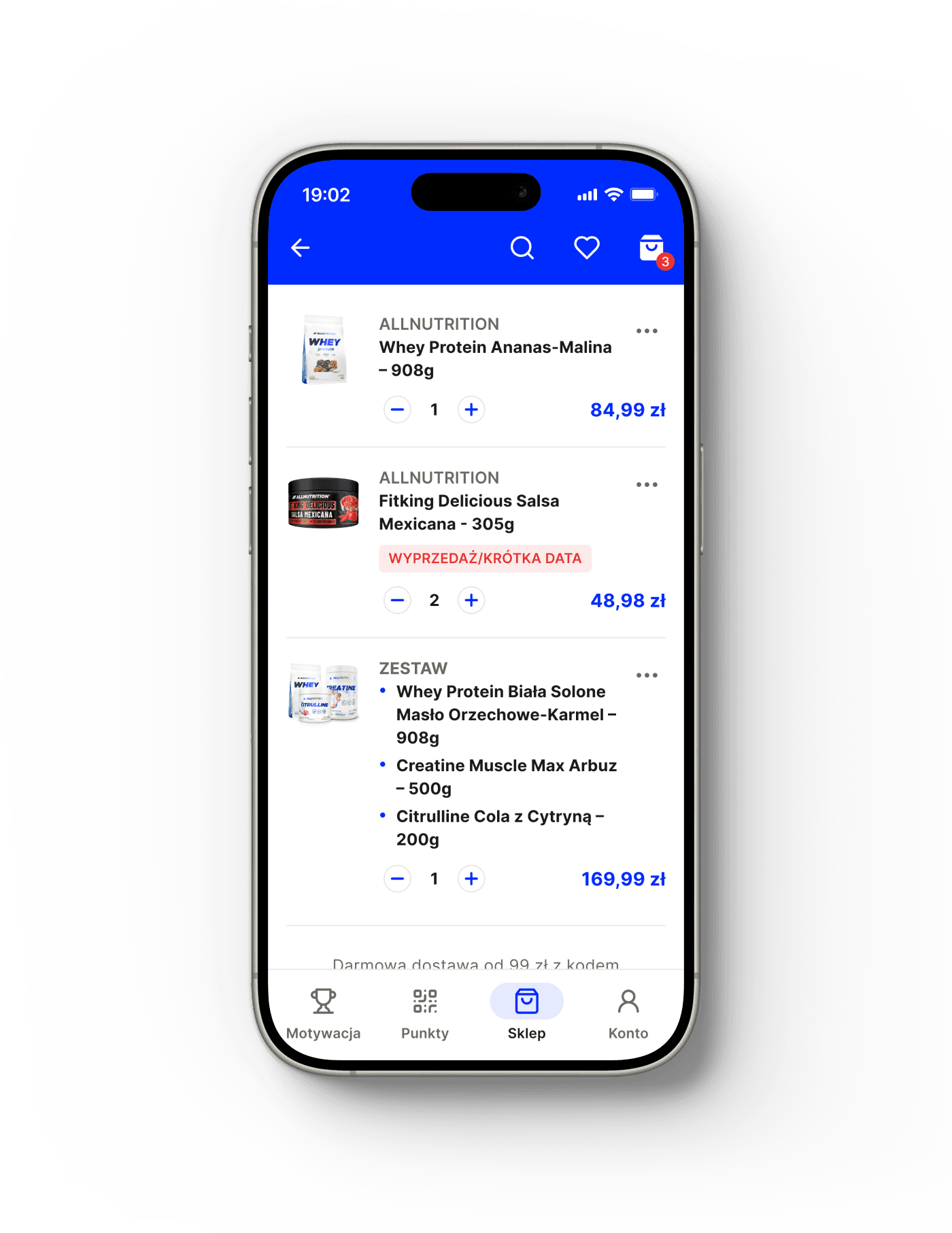
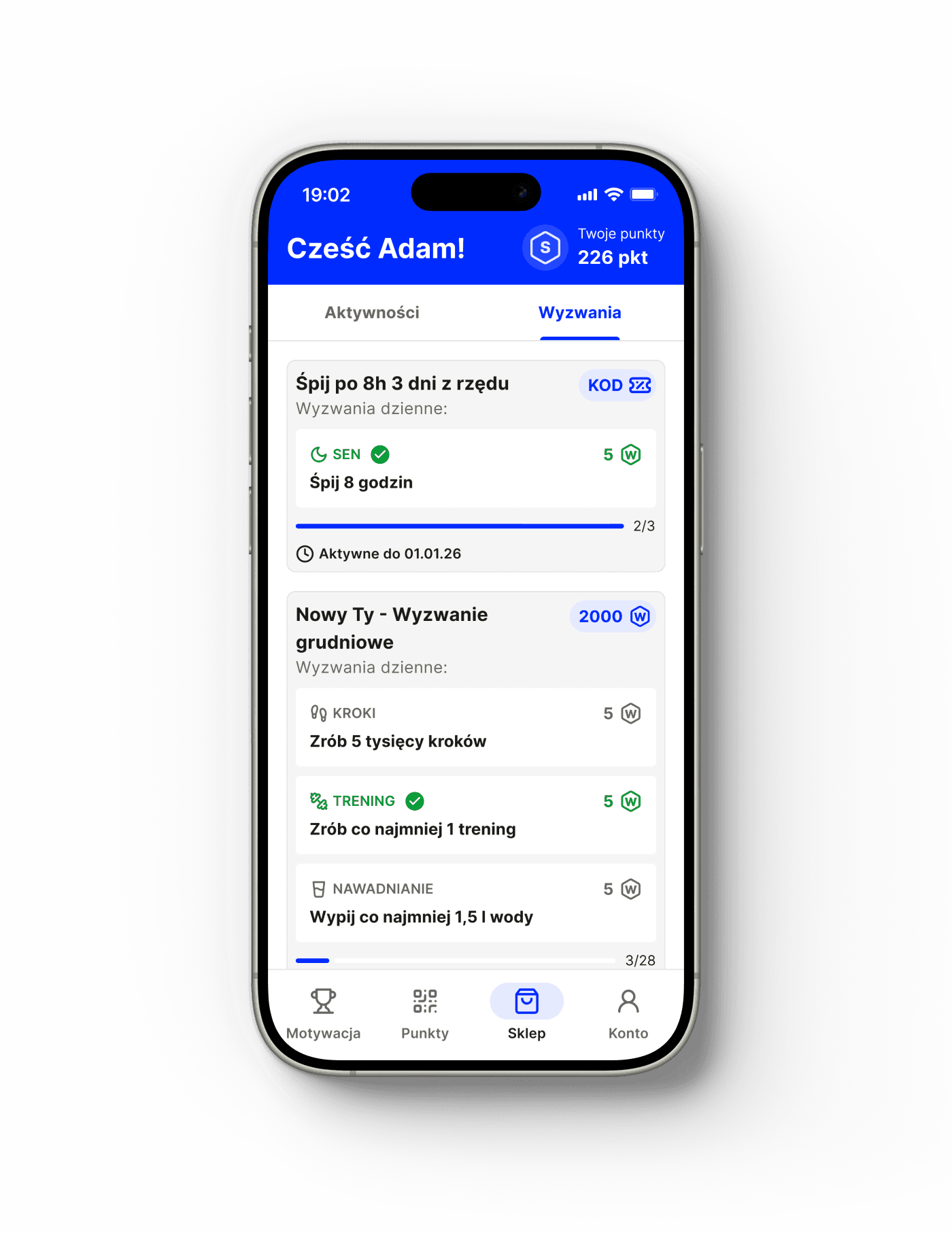
Five lessons for commerce brands
If you are planning a shopping, loyalty or community app, these decisions should be resolved in DDT before the first development sprint.
Do not build a mobile-web copy
The app needs its own installation reason: push, points, reorder, challenges, account, order history or flows that are easier than in a browser.
Cart is a technical product
Prices, promos, availability, bundles and payments must behave the same in app and web. Otherwise users lose trust at the most expensive step of the funnel.
Campaign peaks are designed early
Feature flags, cache, queues, monitoring and load tests are not Black Friday extras. They are commerce architecture from day one.
Retention starts outside checkout
In SFD, shopping connects with points and activity. That matters because an owned return channel lowers dependence on retargeting and rising ad costs.
One partner shortens diagnosis
When mobile, API and integrations are split between random vendors, every incident becomes ping-pong. In commerce, diagnosis time matters.
Architecture that keeps business promises
Users do not judge architecture. They judge whether cart works, promo price is right, login survives payment and the app returns after update without surprises.
- React Native + Expo: one product team for iOS and Android, faster release loop and OTA for selected safe UI fixes.
- Headless/API layer: one data contract for app, web and operations without duplicating price and promo logic across frontends.
- Observability: logs, metrics, tracing and correlation IDs to answer “why did cart fail?” in minutes, not after the campaign.
- Regression testing: critical flows: login, guest-to-account, cart, payment, gateway return, push, promos and offline edge cases.
Metrics leadership cares about, not only product teams
Sources and approach
- GMI/SFD data: 100,000+ downloads, 4.9 App Store rating and Mobile Trends Awards 2025 Commerce nomination.
- Mobile Trends Awards: external product-quality recognition, but not a substitute for business metrics.
- React Native / Expo: stack supporting a shared release loop and iOS/Android maintenance by one team.
- GMI Software: delivery lessons from mobile, backend, commerce integrations and post-launch product maintenance.
Planning a commerce app that needs to drive retention and sales? see our mobile app services
Frequently asked questions
- Is it the same code as other shops?
- Each client has its own domain, config and branding. We reuse proven architecture patterns (observability, feature flags, E2E tests), not copy-paste templates. SFD has dedicated promo logic and brand integrations.
- How do you measure success?
- Conversion, retention, crash-free users, checkout API latency and release overhead - tailored to product phase. For SFD additionally: campaign peak stability and store rating (4.9★).
- Do you support after launch?
- Yes - SLA, monitoring, pre-season release planning and a shared roadmap with the client team. Run covers Expo SDK and React Native upgrades plus peak incident response.
- Does GMI build similar commerce apps for other brands?
- Yes - React Native with Expo, headless backend (Medusa/NestJS), ERP integrations and peak-traffic patterns. Each project starts with discovery (DDT) and fixed-price quote on agreed scope.
- When does a commerce app make sense instead of mobile web only?
- When the brand has repeat purchases, loyalty, community or needs fast customer return through push, points, reorder and flows that work better than web. If the app is only a copy of mobile web, it rarely justifies maintenance cost.
- What should be checked before building a similar app?
- Start with cart, prices, promos, login, payments, ERP/OMS/PIM integrations and account behavior across web and app. In DDT we map those risks, build a clickable prototype and only then lock the fixed-price scope.
Content updated: July 11, 2026
Google Preferred Sources
See GMI more often in Google
Add gmi.software as a preferred source. Google may highlight our new articles more often in Top Stories and supported AI experiences.