AI-native product · HealthTech · iOS, Android and web
Cognic AI. Less work after a session, full therapist control.
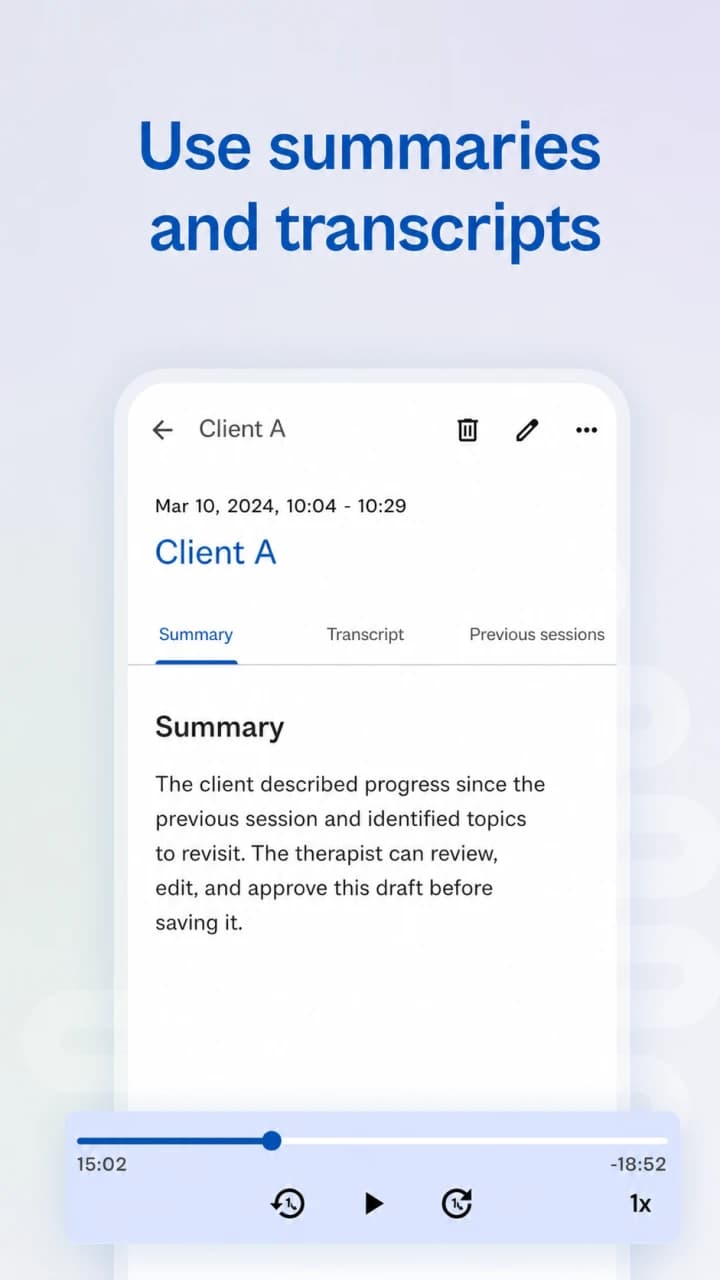
We designed and built an AI assistant that turns a session recording into a transcript, summary, and working note. The practitioner reviews the output, edits it, and decides what becomes part of the final documentation.
Summaries and transcripts
1,000
interested therapists
during the first month of beta testing
30 min
saved after a session
on average, based on beta-stage data
5
language versions
Polish, English, German, Spanish, and Italian
01 · Context
A product built around the practitioner’s real work
After a meeting, a therapist needs to reconstruct the conversation, organise the important information, and prepare documentation. With several sessions a day, that work accumulates, consumes time, and increases the risk of missing important context.
Cognic was created as a specialised post-session assistant—not as a chatbot that conducts therapy and not as a system that makes clinical decisions.
02 · Challenge
The challenge: automate the work without handing responsibility to AI
In this product, speed could not outrank trust. Recordings and notes contain sensitive context, models can miss nuance, and generated text may sound more certain than the source material allows.
We had to combine a simple mobile flow, reliable transcription, flexible note templates, and manual correction. At the same time, the project required legal and data-protection input and a product foundation ready for multiple markets.
03 · Solution
The solution: working material that stays under human control
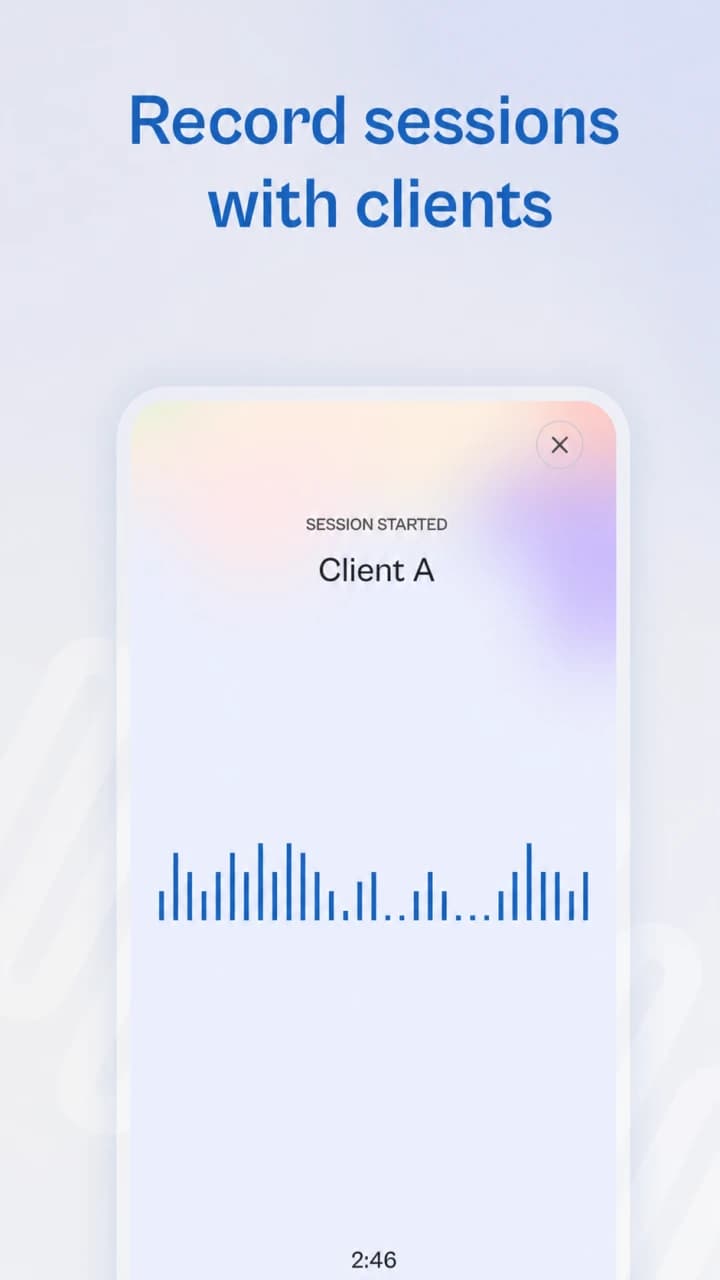
Cognic records a session in the mobile app, separates speakers, and then prepares a transcript, summary, and note draft in the chosen format. The user reviews the material, corrects it, and approves the final content.
Patient history supports continuity, while the web panel makes longer review and editing easier on a larger screen. For clinics, the product supports organisations, invitations, and a shared usage pool.
04 · Workflow
From a completed session to a structured note
The interface guides the user through one clear process. AI does the preparatory work, but the final step always belongs to the practitioner.
- 01
The therapist records a session
A single action starts recording in the mobile app. The product communicates its scope and supports an informed-consent process.
- 02
The system structures the conversation
The recording becomes a speaker-labelled transcript, making it easier to return to the right part of the conversation.
- 03
AI prepares working material
Cognic creates a summary and note draft in the selected format, including a structured SOAP note.
- 04
The practitioner verifies the result
The therapist compares the draft with the transcript, edits the content, and decides what belongs in the final documentation.
05 · Product
The product goes beyond a single summary
What began as a tool for one practitioner evolved into a connected mobile and web ecosystem for therapists and clinics.
06 · Responsibility and delivery
AI supports documentation. It does not replace clinical judgement.
The key product decision was to treat model output as a draft, not as unquestionable documentation. This deliberately keeps a human in the loop and limits automation risk.
We developed the solution alongside legal and data-protection consultations. Product communication does not promise diagnosis, therapy, or error-free AI output.
- 01AI output always requires practitioner review
- 02the user decides the final content of the note
- 03the product clearly separates documentation from diagnosis and therapy
- 04consent, retention, and recording scope are part of the workflow—not an afterthought
07 · Product architecture
Product architecture
The stack supports fast development across two mobile platforms, AI processing, and continued product scaling.
- React Native + Expo
- one mobile product codebase for iOS and Android
- Node.js
- server-side application logic and process orchestration
- PostgreSQL
- structured product and user data
- Redis
- fast task processing and temporary data
- Speech models and LLMs
- transcription, speaker separation, summaries, and note drafts
- RevenueCat
- consistent subscriptions and packages across the App Store and Google Play
08 · Outcome
The outcome: from an idea to a multi-market product
Cognic progressed from AI validation to a working ecosystem for individual therapists and teams.
- 1,000 interested therapists during the first month of beta testing
- an average of 30 minutes less post-session work, based on beta-stage data
- an iOS and Android mobile app supported by a web panel
- five language versions: PL, EN, DE, ES, and IT
- global distribution across 175 App Store regions and 173 Google Play regions
- a product model for both individual practices and therapy clinics
“The team was a great partner in the project—punctual, engaged, and flexible. We felt they genuinely cared about the final result. The app met our expectations, and communication was smooth at every stage.”