Advanced ecommerce
Five commerce models. One architecture partner.
We help leaders choose and build the right commerce model when business rules, channels and enterprise systems outgrow a standard store.
The operating model atlas
Compare five models. Choose your path.
Each model has a different buyer, critical risk and architecture centre of gravity. Start with how the business operates.
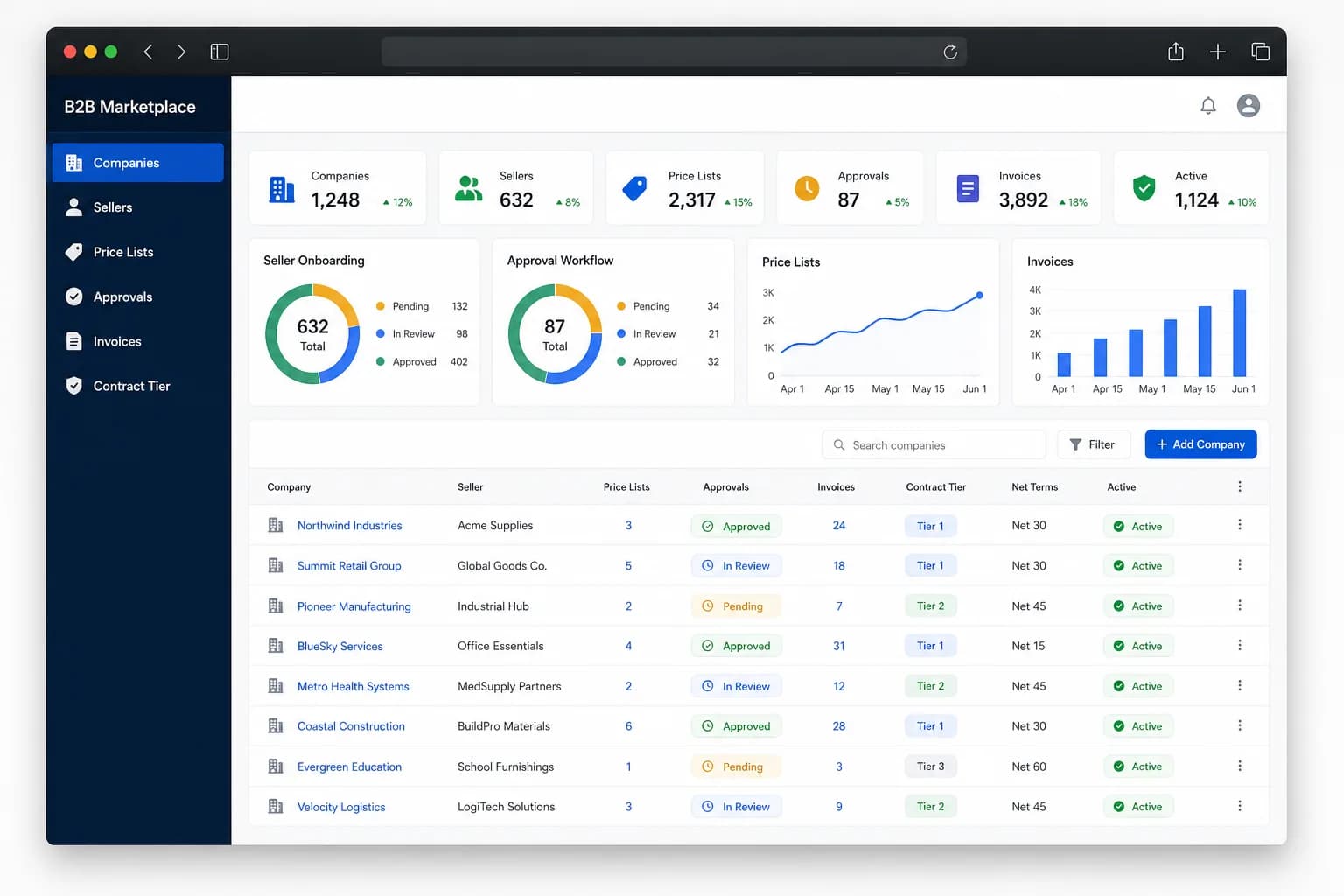
Multi-vendor B2B marketplace
Buyer modelMany suppliers and company buyers. Shared catalogue.
Hard problemSupplier onboarding, pricing rules, credit, commissions and settlement.
Operational systemsPIM, ERP, payments, CRM, WMS, tax.
Explore model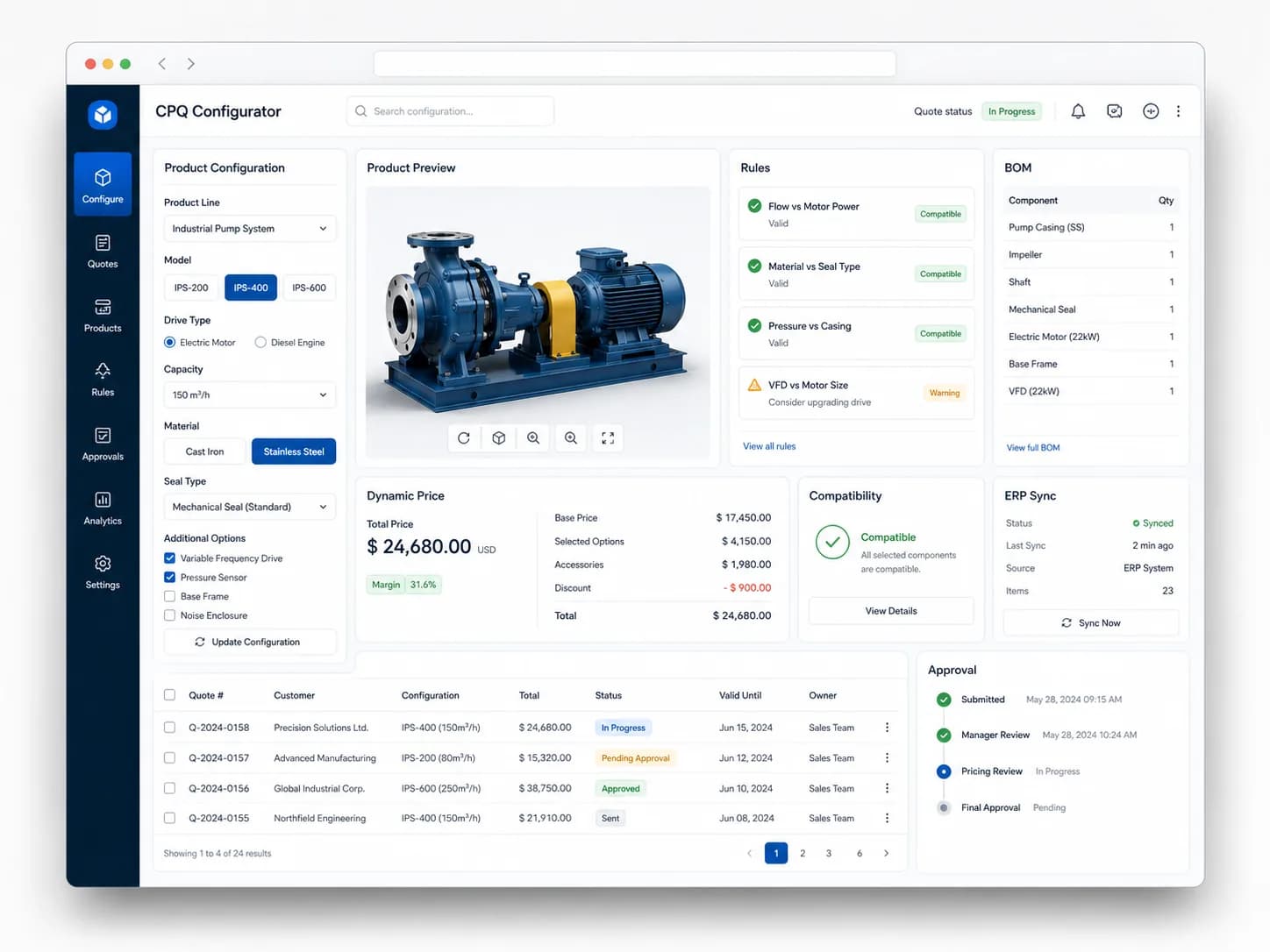
CPQ & product configurators
Buyer modelEngineers, sales teams and channel partners.
Hard problemComplex products, rules, BOM, pricing and approvals.
Operational systemsPIM, ERP, CAD/BOM, CPQ, pricing, CRM.
Explore model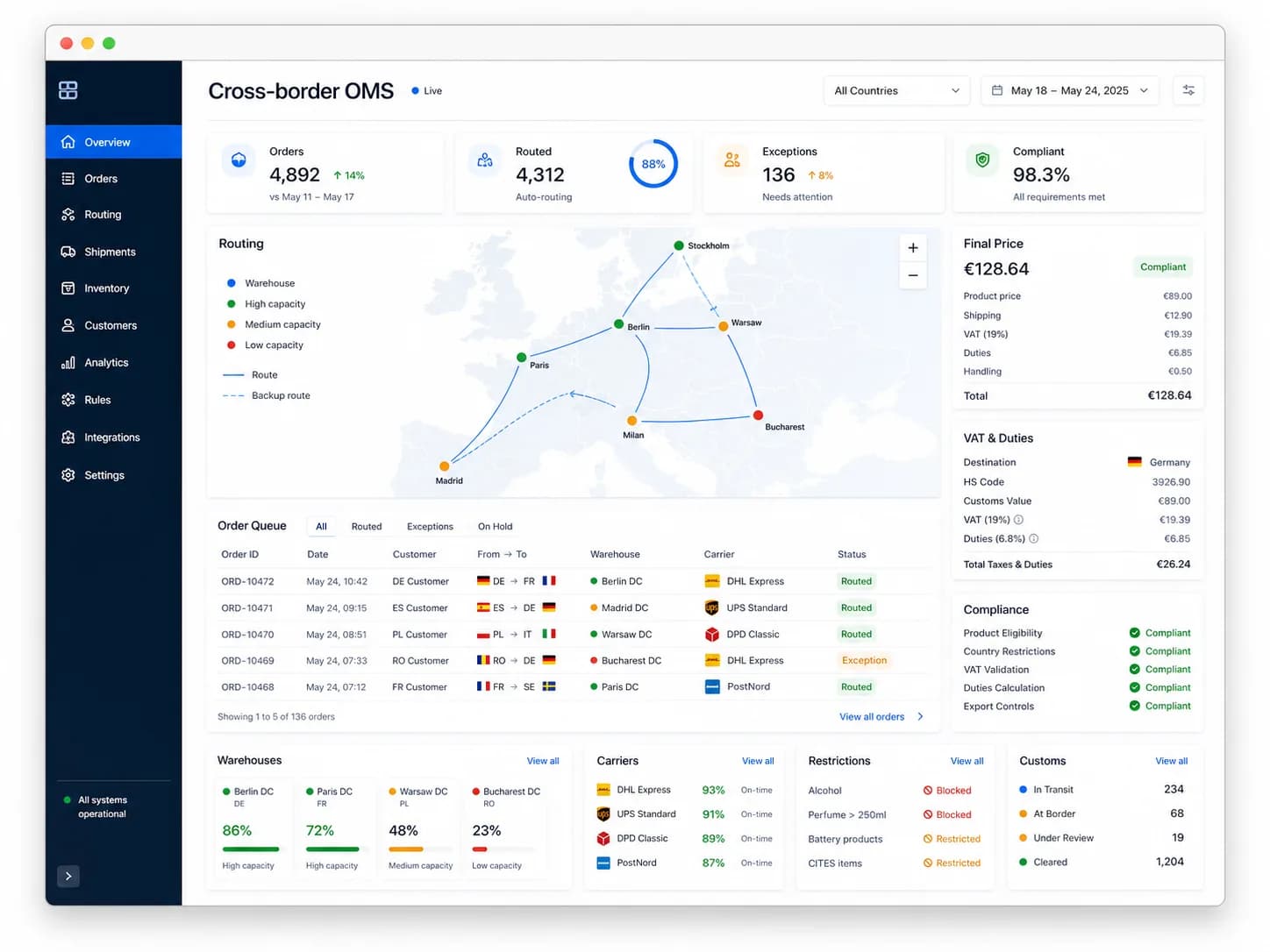
Cross-border composable commerce
Buyer modelGlobal buyers across markets and regulations.
Hard problemTaxes, duties, compliance, languages and currencies.
Operational systemsERP, tax engines, logistics, payments, localisation.
Explore model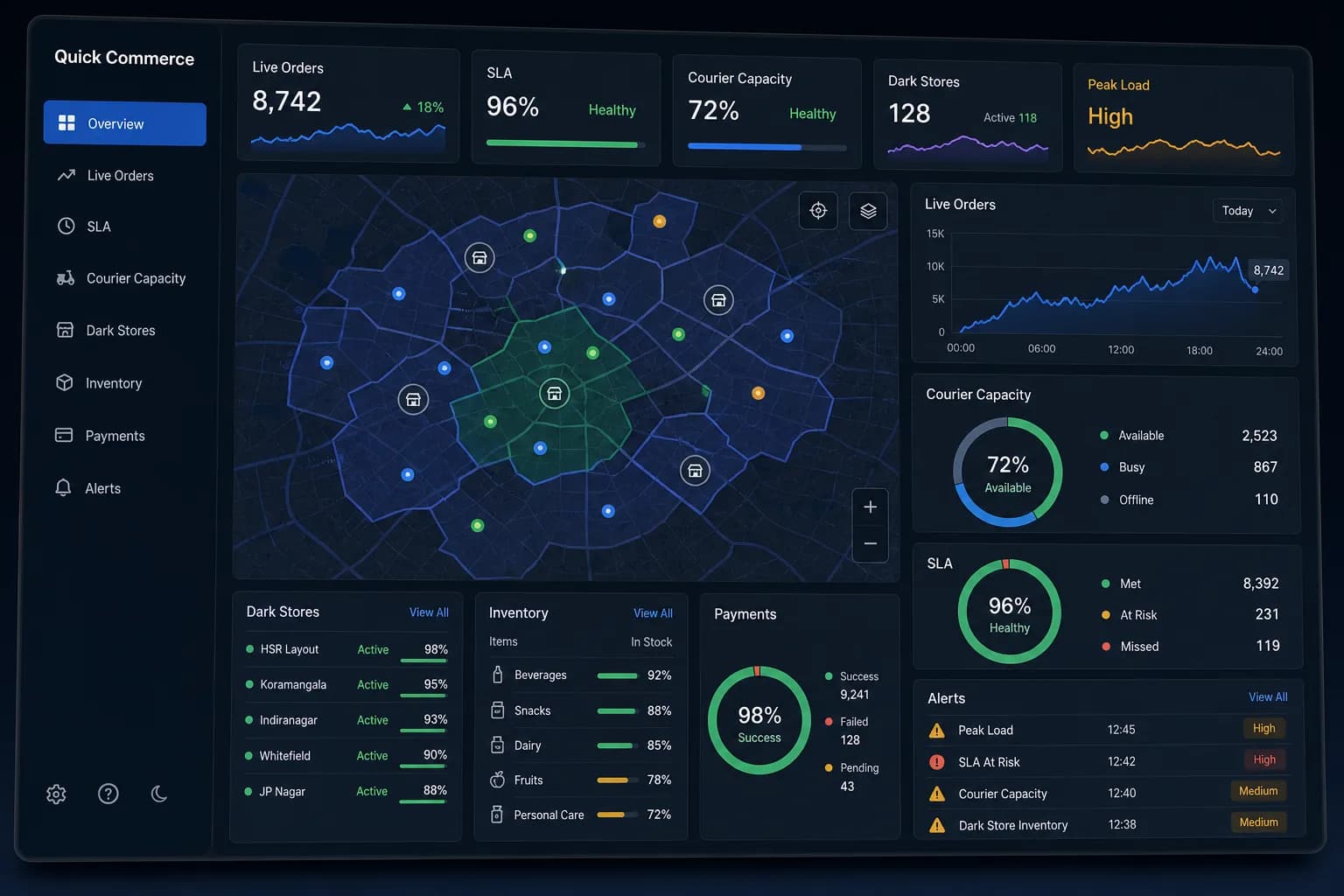
Quick commerce & dark stores
Buyer modelCustomers who expect speed and local availability.
Hard problemReal-time inventory, routing and last-mile SLAs.
Operational systemsWMS, OMS, routing, payments, real-time inventory.
Explore model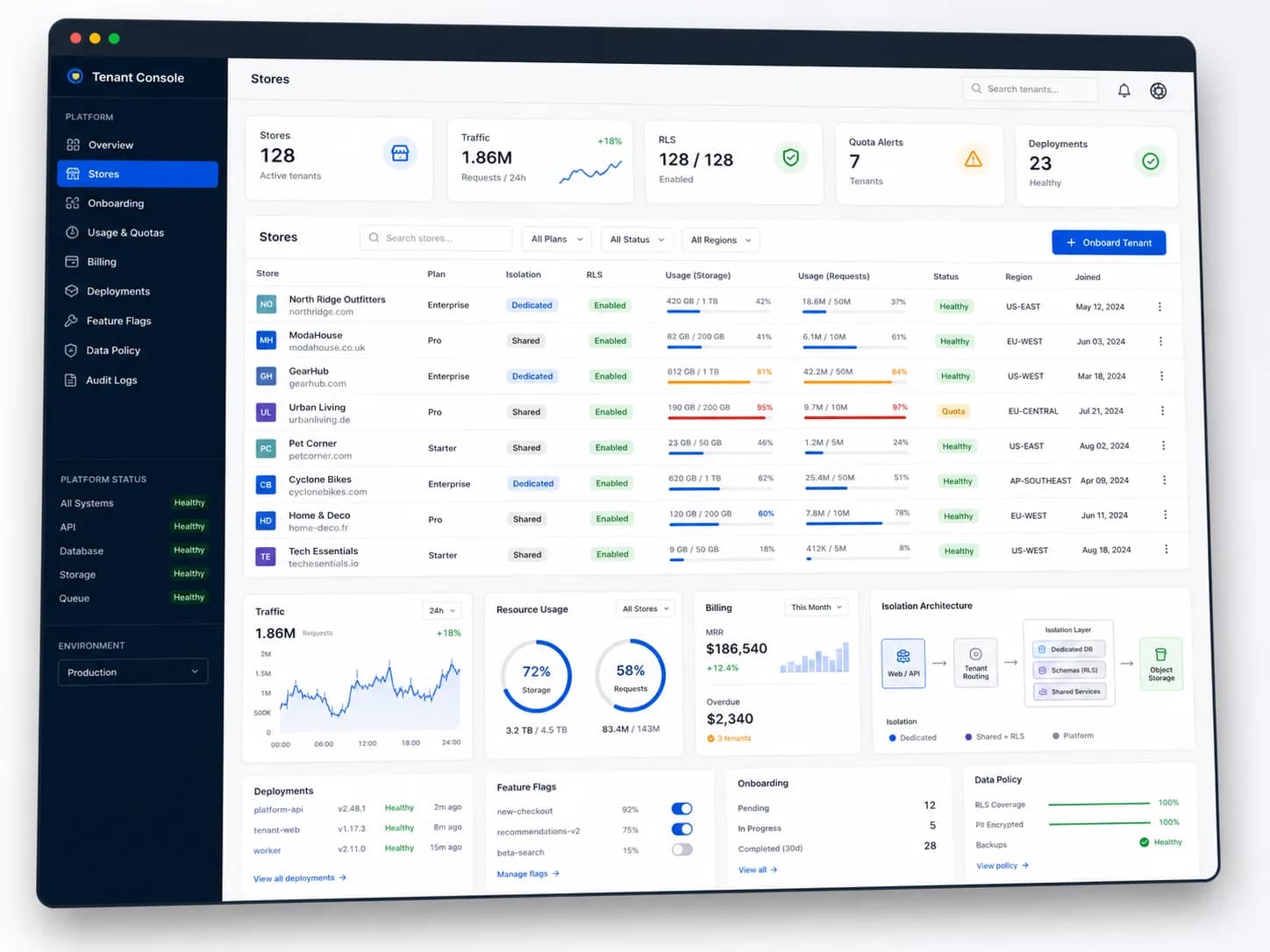
Multi-tenant SaaS commerce
Buyer modelPartners and tenants serving their own customers.
Hard problemTenant isolation, configurable catalogues and subscriptions.
Operational systemsIAM, billing, catalogue, ERP, metering, support.
Explore modelDesign that scales
The architecture follows the operating model.
We map decisions, data and ownership first. Only then do we choose the commerce core, integration boundaries and services that need to stay custom.
Commerce
Core
Commerce delivery proof
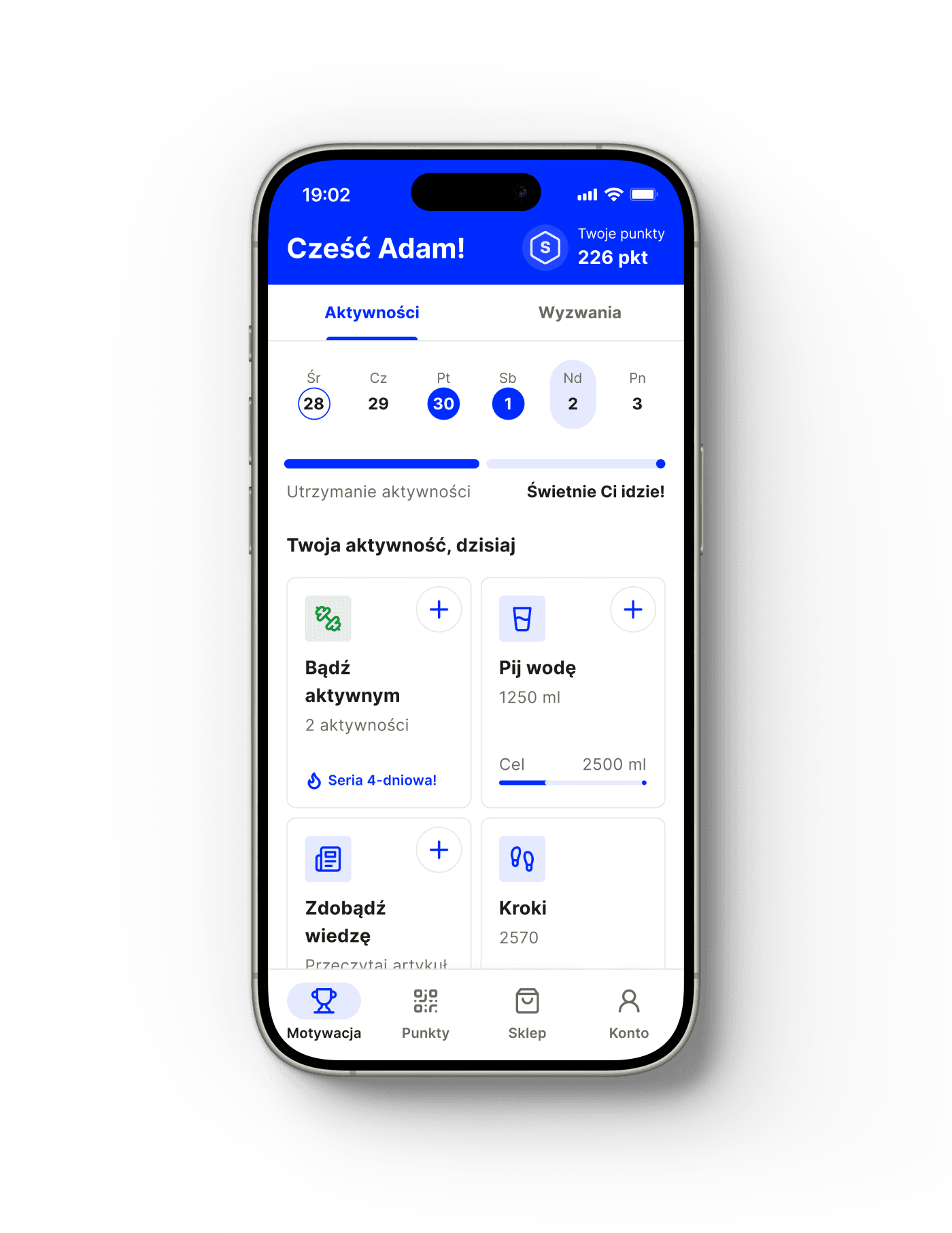
SFD: commerce connected to a mobile experience.
The app connects shopping, loyalty and an omnichannel customer journey. This proves commerce product delivery — it does not claim a specific backend architecture for this page.
app downloads
Read the SFD case study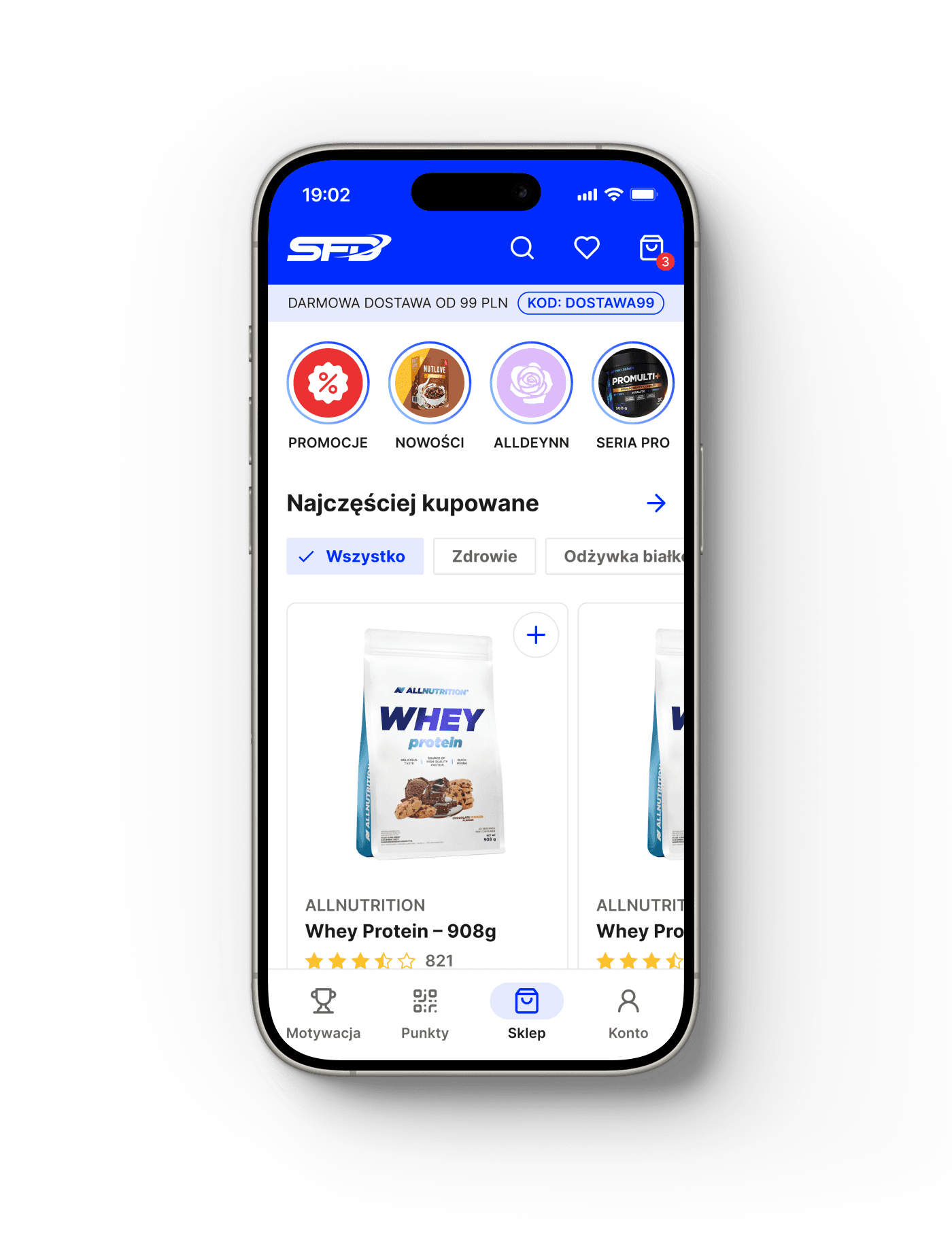
FAQ
Questions from commerce leaders
Content last updated: March 18, 2026
When should you choose custom ecommerce instead of Shopify or Magento?
When your model needs many suppliers in one cart, deep B2B pricing and contracts, CPQ with BOM, live cross-border tax and duties, or realtime geofencing like quick commerce—packaged SaaS often cannot encode that logic without expensive workarounds.
What is split checkout in a B2B marketplace?
It splits one customer order into fulfilments, payments and settlements per supplier—while keeping a single buyer experience. That needs a coherent order core, finance integrations and usually event queues.
What does MACH architecture mean for ecommerce?
MACH is microservices, API-first, cloud and headless: a storefront (e.g. Next.js) separated from order engines and domain services (e.g. NestJS, PostgreSQL) that you can swap and scale independently.
How is this cluster different from your headless & B2B commerce service page?
Our headless commerce page covers the broad practice of storefronts and ERP/PIM work. Here we focus on the hardest shapes: multi-vendor marketplaces, manufacturing CPQ, OMS-heavy cross-border, quick commerce and multi-tenant SaaS—with emphasis on backends and integrations.
Do you always use MedusaJS?
No—MedusaJS is a strong fit where the commerce layer matches the product. For extreme marketplaces, CPQ or multi-tenancy we often extend or replace parts with dedicated NestJS services and a relational core.
Ready to choose your path?
Let us find the right operating model for your business.
We will map your requirements, test the fit across five models and outline the safest next step.
Find my operating modelLet's talk
about the project.
Have an app idea or need technological support? Write to us — we'll prepare a preliminary analysis and estimate within 48h. Projects that go through our DDT process (Discovery, Design & Technology) come with a price guarantee and a fixed-price agreement — a key differentiator for us.
80-890 Gdansk, PolandNearshore product delivery across EU, UK and US time zones.